
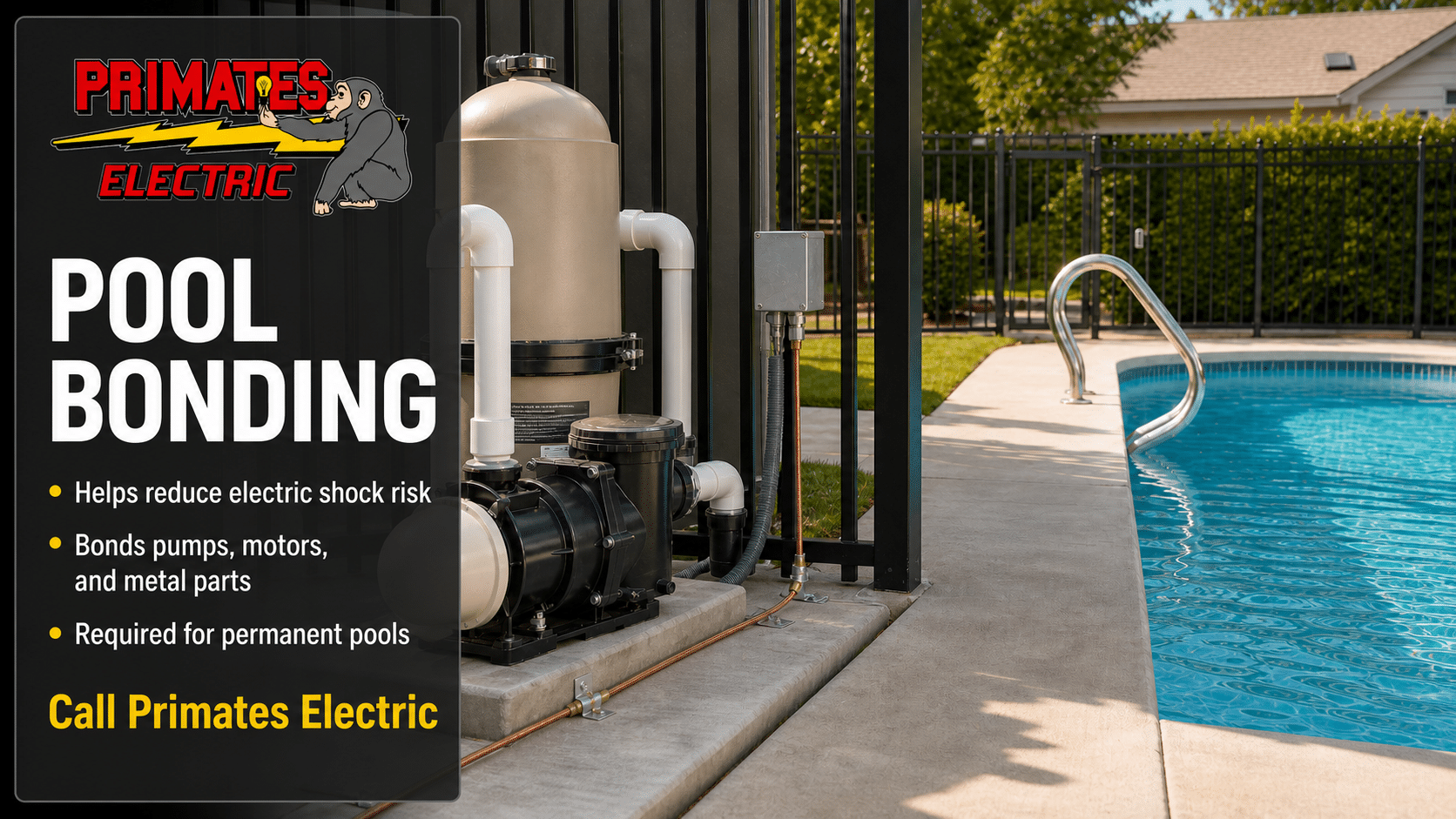
Pool Bonding: The Important Safety Step Every Pool Owner Should Understand
Summer is the perfect time to enjoy your pool, invite friends over, and cool off with family. It is also the right time to think about one pool safety requirement that many homeowners do not know about: pool bonding.
Permanent above-ground and in-ground pools are required by electrical code to be properly bonded. Pool bonding helps protect swimmers from dangerous voltage differences that can develop between the water, pool equipment, metal components, and the surrounding ground.
When pool bonding is missing, damaged, or installed incorrectly, people may be exposed to electric shock while entering the pool, touching a metal ladder, operating equipment, or standing near the water. In serious cases, electrical problems around a pool can create a risk of electrocution.
Pool bonding is not simply an optional upgrade or a technical detail for electricians to worry about. It is an important part of a safe pool installation. Primates Electric can help homeowners understand their pool’s bonding requirements and make sure the work is completed carefully and correctly.
What Is Pool Bonding?
Pool bonding is the process of connecting conductive metal parts around a swimming pool with a continuous bonding conductor. In many standard installations, this conductor is a bare number 8 copper wire installed around the pool.
The purpose is to keep all connected metal components and conductive surfaces at nearly the same electrical potential. If stray electrical current or voltage is present, the bonding system helps reduce the difference in voltage between these components.
That matters because electricity can travel through water and through the human body. A person standing in or near a pool can become part of the electrical path if different metal components or surfaces have different electrical potentials.
A properly installed bonding system gives unwanted electrical energy a safer path and helps minimize the chance of a swimmer receiving a shock.
It is important to understand that pool bonding and electrical grounding are related, but they are not exactly the same thing. Grounding connects electrical systems to the earth and helps clear certain faults. Bonding connects conductive parts together so they remain at the same potential. A safe pool electrical system generally requires both proper bonding and proper grounding.
Why Is Pool Bonding Required?
Water and electricity are an extremely dangerous combination. Even a relatively small amount of stray voltage can become hazardous when a person is wet, barefoot, and in contact with a pool or metal equipment.
Pool bonding requirements exist to reduce the possibility of shock caused by voltage differences. These differences can come from several sources, including:
- Faulty pool pumps or motors
- Damaged electrical wiring
- Improperly installed lighting
- Nearby electrical equipment
- Lightning or electrical surges
- Metal components that were never connected to the bonding system
- Corrosion or loose connections
- Electrical equipment that has deteriorated over time
Without a complete bonding system, one metal component may carry a different electrical potential than another. A person touching both components could experience an electrical shock.
This is why pool bonding is considered a major safety standard. It is designed to protect people before an electrical problem becomes a visible emergency.
How Is Pool Bonding Installed?
A typical pool bonding installation involves several important steps. The exact requirements may vary based on the pool design, local code requirements, and the authority having jurisdiction, but the general process often includes the following.
First, an electrician installs a bonding conductor around the pool. For many permanent pool installations, this involves digging a trench approximately four inches deep around the pool and placing number 8 bare copper wire in the trench.
The wire forms a continuous ring around the pool area. This ring is then connected to the pool’s metal structure and other required conductive components.
In many installations, the bonding wire is fastened to the metal pool structure at four approved attachment points. These connections must use approved tap connections, listed bonding devices, and appropriate screws or hardware. The connections must be tight, secure, and protected from corrosion.
The pool equipment is then connected to the same bonding system. This may include motors, pumps, heaters, filters, and other equipment associated with the pool. The goal is to make sure the equipment and pool structure are bonded together rather than operating as separate electrical systems.
A professional electrician will also inspect the surrounding area for other fixed metal parts that may need to be bonded.
What Metal Parts Around a Pool Need to Be Bonded?
Pool bonding is not limited to the pool itself. Fixed metal parts within the required zone around the pool may also need to be connected to the bonding system.
In many cases, the bonding zone extends five feet from the inside walls of the pool. Depending on the layout and local requirements, this may include:
- Metal fences
- Metal gates
- Metal door frames
- Metal window frames
- Metal awnings
- Metal equipment enclosures
- Metal handrails
- Metal ladders
- Metal diving boards and supports
- Metal pool covers or related hardware
- Other fixed metal objects near the pool
This five-foot area is easy for homeowners to overlook. A metal fence or gate may appear unrelated to the pool’s electrical system, but if it is close enough to the water, it can become part of the potential shock hazard if it is not properly bonded.
The same applies to metal doors, windows, awnings, and equipment housings near the pool deck. A complete inspection should account for all fixed conductive parts in the required area.
Above-Ground Pools Need Pool Bonding Too
Some homeowners assume that only in-ground pools require bonding. That is not correct for permanent above-ground pools.
Many permanent above-ground pools have metal walls, frames, supports, ladders, pumps, or other conductive parts. These components can create the same type of voltage difference found around an in-ground pool.
The pool’s structure, pump motor, filter system, ladder, and other required components may need to be bonded together. The installation must be evaluated based on the pool type and the applicable electrical code.
Temporary inflatable pools may have different requirements, but homeowners should not assume that every above-ground pool is exempt. If a pool is permanent or has electrical equipment, it is wise to consult a qualified electrician before using it.
Pool Bonding Is Different From a GFCI
A ground fault circuit interrupter, commonly called a GFCI, is another important pool safety device. A GFCI monitors electrical current and can shut off power when it detects that current is traveling along an unintended path.
GFCI protection can help reduce the risk of serious electrical injury. However, a GFCI does not replace pool bonding.
Pool bonding and GFCI protection serve different purposes. Bonding helps keep metal components and conductive surfaces at the same electrical potential. A GFCI helps interrupt power when it detects a ground fault.
A safe pool electrical system may require proper bonding, grounding, GFCI protection, correctly installed disconnects, and other safeguards. These systems work together, but one cannot be used as a substitute for the others.
Signs Your Pool Bonding May Need Attention
Pool bonding systems are generally installed out of sight, which means homeowners may not know when something has become damaged. A few warning signs should prompt a professional inspection.
You may need to have your pool bonding system checked if:
- The pool was installed without an electrical inspection
- You recently purchased a home with a pool
- The pool has been remodeled or relocated
- A pump or motor was replaced
- The pool ladder or metal fence was added later
- You feel tingling while touching pool equipment
- You have noticed electrical shocks near the pool
- The bonding wire has been cut or disturbed during landscaping
- The pool deck or surrounding trench was renovated
- Electrical equipment has corrosion or visible damage
- A breaker or GFCI trips repeatedly
- You are unsure whether the pool was bonded during installation
If anyone feels a shock or tingling sensation around the pool, stop using the pool immediately. Keep people away from the area and contact a qualified electrician. Do not continue testing the equipment yourself.
Why Professional Pool Bonding Matters
Pool bonding requires more than simply placing copper wire in the ground. The bonding conductor must be continuous, properly sized, securely connected, and attached to the correct components.
A professional electrician can identify missing connections, loose hardware, damaged conductors, and metal parts that were overlooked during the original installation. They can also help determine whether the existing work meets current local requirements.
This is especially important for older pools, pools built by previous homeowners, and properties where electrical or landscaping work has been completed around the pool.
Attempting to repair pool bonding without the proper training can create additional hazards. Working around pool wiring, pumps, motors, and buried conductors requires care and knowledge of electrical safety requirements.
Trust Primates Electric for Pool Bonding
Primates Electric provides professional electrical services focused on safety, quality workmanship, and reliable solutions. The company works with homeowners to identify electrical concerns and address problems at their source.
If you are installing a permanent above-ground or in-ground pool, renovating an existing pool area, replacing pool equipment, or simply unsure whether your pool is properly bonded, Primates Electric can help you determine the next step.
A pool should be a place where your family can relax. Proper pool bonding is one of the behind-the-scenes safety measures that helps keep it that way.
Before the busiest part of summer, schedule an inspection or consultation with Primates Electric. Call (423) 292-8214 or visit primateselectric.com to learn more.
Frequently Asked Questions About Pool Bonding
What is the purpose of pool bonding?
The purpose of pool bonding is to connect conductive metal parts around a pool so they remain at nearly the same electrical potential. This helps reduce the risk of electric shock caused by voltage differences between the pool, equipment, ladders, fences, and other metal components.
Do permanent above-ground pools need to be bonded?
Yes, permanent above-ground pools may require bonding. Metal pool walls, frames, supports, ladders, pumps, and other conductive parts can create electrical hazards if they are not properly connected. The exact requirements depend on the pool design and local electrical code.
How deep should pool bonding wire be buried?
A typical pool bonding installation involves burying number 8 bare copper wire approximately four inches below grade around the pool. Local requirements and site conditions may vary, so a licensed electrician should confirm the correct installation.
Does a pool pump need to be bonded?
Yes. Pool pumps, motors, heaters, filters, and other associated equipment generally need to be connected to the pool bonding system. This helps keep the equipment and pool structure at the same electrical potential.
Does a GFCI replace pool bonding?
No. A GFCI and a pool bonding system provide different types of protection. GFCI devices interrupt power when they detect a ground fault, while bonding connects conductive components together to reduce voltage differences.
What should I do if I feel a shock in or near my pool?
Stop using the pool immediately and keep everyone away from the area. Do not touch pool equipment or attempt to investigate the problem yourself. Contact a qualified electrician to inspect the pool bonding, grounding, wiring, and protective devices.
Can landscaping damage pool bonding?
Yes. Digging, grading, new patios, fencing, irrigation work, and other landscaping projects can damage or disconnect buried bonding wire. If work has been completed around the pool, it is a good idea to have the bonding system inspected.
How do I schedule pool bonding service?
Contact Primates Electric at (423) 292-8214 or visit https://primateselectric.com to request more information about pool bonding and related electrical services
Also Visit Primates Electric on Incredible Towns.