
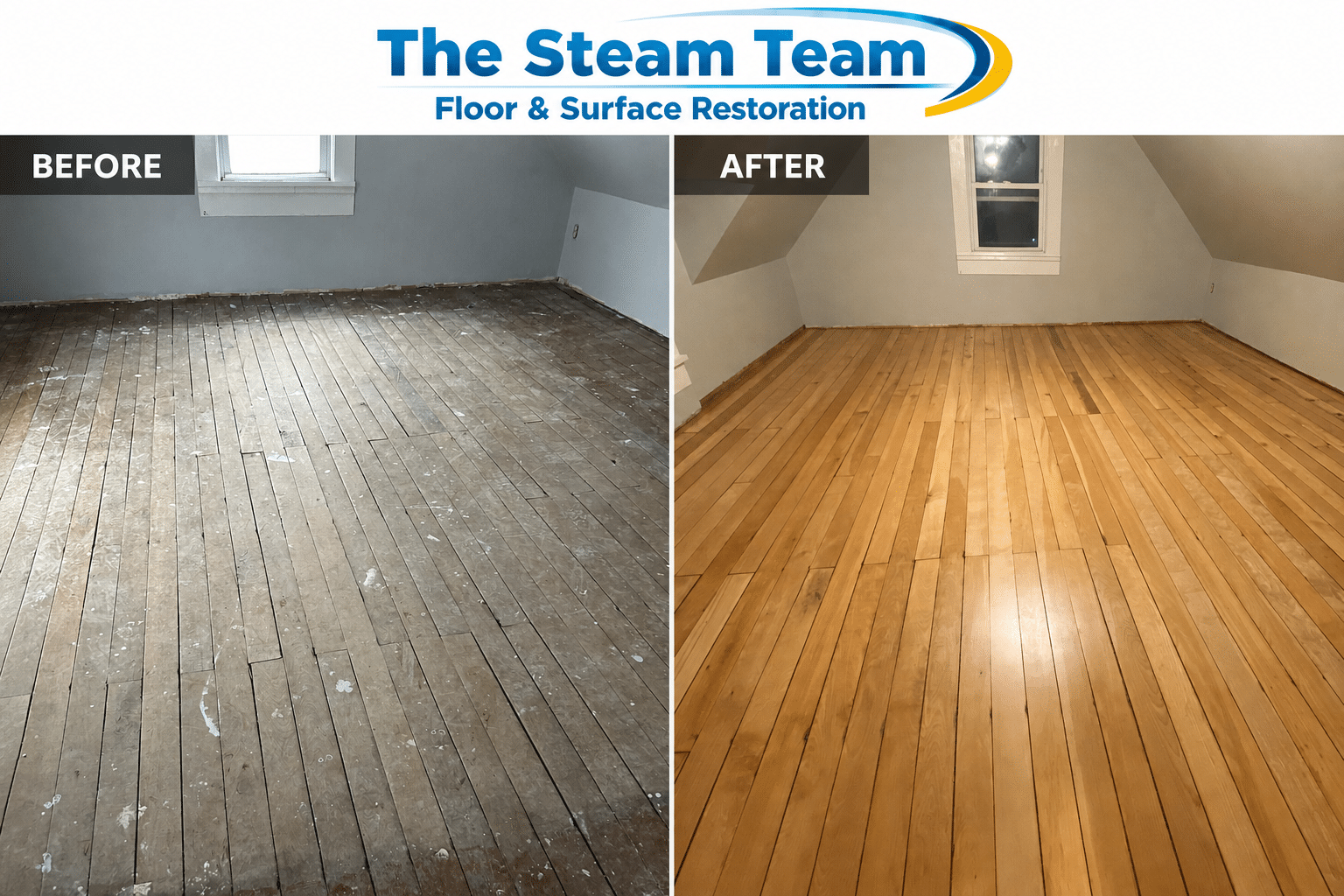
Hardwood flooring is durable, but it is not maintenance-free. Over time, dust, grit, pet hair, spills, cleaning product residue, and everyday foot traffic can affect both the appearance and protective finish of the wood. Floors may begin to look cloudy, scratched, faded, or uneven even when they are cleaned regularly.
Understanding the difference between hardwood floor cleaning and refinishing is important because the two services address different problems. Cleaning removes surface dirt, residue, and embedded buildup without sanding the floor. Refinishing is a more extensive process that removes worn finish and a thin layer of damaged wood before applying new stain or protective coatings.
In many cases, a floor that looks dull does not necessarily need to be refinished. A professional cleaning may be enough to remove residue and restore the appearance of the existing finish. However, cleaning cannot repair deep scratches, water stains, worn-through finish, or damage that has reached the wood itself. Those conditions may require refinishing.
The condition of hardwood floors can also vary from room to room. Entryways, kitchens, hallways, and living rooms often experience more wear than bedrooms or formal spaces. Homes with pets and children may also develop more frequent spills, scratches, and tracked-in debris. In the Tri-Cities region, seasonal changes in humidity and moisture can contribute to expansion, contraction, gaps, or other changes in wood flooring.
Before choosing a cleaning or refinishing service, it helps to look closely at the floor’s surface. If the main issue is dirt, haze, or sticky residue, professional cleaning may be the appropriate solution. If the finish is visibly worn away or the wood is scratched, stained, or discolored, refinishing may provide a more complete restoration.
The following guide explains how hardwood floor cleaning and refinishing work, what signs to look for, how to maintain your floors, and when it may be helpful to contact a professional serving Elizabethton, Johnson City, Kingsport, Bristol, and surrounding Tri-Cities communities.
What Is the Difference Between Hardwood Floor Cleaning and Refinishing?
Hardwood floor cleaning and hardwood floor refinishing are two different services. Understanding the difference can help you choose the right solution for your floors.
 Professional hardwood floor cleaning is designed to remove dirt, dust, residue, and buildup from the surface of the flooring. It is a maintenance service that can refresh the appearance of your floors without sanding away the existing finish. Cleaning is often the best choice when your floors look dirty, hazy, or dull but do not have significant damage to the wood itself.
Refinishing is a more extensive restoration process. It typically involves preparing the floor, sanding away the damaged finish, repairing imperfections, applying stain if desired, and adding new protective finish coats. Refinishing is usually recommended when scratches, discoloration, worn areas, water marks, or other damage has penetrated beyond the surface.
A professional inspection can help determine whether your flooring needs cleaning, refinishing, or another type of restoration. In some cases, a deep cleaning may be enough to restore the floor’s appearance. In other situations, refinishing may be necessary to address deeper wear.
Why Hardwood Floors Become Dull and Dirty
Hardwood floors are exposed to daily use. Every person, pet, shoe, and piece of furniture that crosses the floor can contribute to gradual wear.
Some of the most common causes of dull or dirty hardwood floors include:
- Dirt and grit tracked in from outside
- Pet hair, dander, and paw prints
- Food and drink spills
- Cleaning product residue
- Excess moisture
- Furniture scratches
- High-traffic patterns
- Sunlight and fading
- Humidity and seasonal changes
- Neglected entryways and hallways
Sweeping and vacuuming regularly can remove loose dirt, but fine particles and sticky residue may remain on the surface. Over time, that buildup can make the finish appear cloudy or uneven.
A professional hardwood floor cleaning service uses specialized equipment and cleaning solutions designed for wood flooring. The goal is to clean effectively without oversaturating the floor or damaging the finish.
Benefits of Professional Hardwood Floor Cleaning
Regular professional cleaning can help maintain the beauty and longevity of hardwood floors. It may also be a cost-effective way to improve the appearance of your flooring before considering a more intensive refinishing project.
Restores the Natural Appearance
Dirt and residue can hide the color and grain of hardwood flooring. Professional cleaning removes buildup and helps bring back the natural character of the wood.
Removes Sticky Residue
Some household cleaning products leave behind a film that attracts more dust. A professional cleaning process can help remove that residue and leave the floor looking cleaner and more consistent.
Helps Protect the Finish
Dirt and grit can act like small abrasives under shoes and furniture. Removing those particles can help reduce unnecessary wear on the protective finish.
Improves High-Traffic Areas
Entryways, kitchens, hallways, and living rooms often show more wear than other areas of the home. Professional cleaning can help improve the overall appearance of these heavily used spaces.
Extends the Time Between Refinishing Projects
Cleaning does not replace refinishing when the wood is deeply scratched or damaged. However, routine professional cleaning may help preserve the existing finish and delay the need for more extensive restoration.
The Hardwood Floor Cleaning Process
Every floor is different, so the cleaning process should be based on the type of wood, the existing finish, and the condition of the floor.
A professional hardwood floor cleaning process may include the following steps:
1. Floor Inspection
The first step is evaluating the flooring. This helps identify the wood type, finish condition, high-traffic areas, stains, scratches, and other concerns.
2. Dry Soil Removal
Loose dirt, dust, and grit are removed through vacuuming or dry cleaning methods. This step is important because abrasive particles can scratch the floor during cleaning.
3. Specialized Deep Cleaning
Professional hardwood floor equipment is used to lift embedded dirt and surface buildup. The process is designed to clean thoroughly while protecting the wood and finish.
4. Residue Removal
Any remaining cleaning solution or sticky residue is removed so the floor does not feel tacky after service.
5. Optional Conditioning or Polishing
Depending on the floor’s condition and finish, an additional treatment may be recommended to improve the appearance and add a refreshed shine.
Professional hardwood floor cleaning is especially helpful for homes with pets, children, rental properties, vacation homes, offices, and businesses with high foot traffic.
When Does Hardwood Flooring Need Refinishing?
 Cleaning can improve the appearance of a floor, but it cannot repair every type of damage. Refinishing may be the better option when the existing finish has worn away or the wood itself has been affected.
Signs your hardwood floors may need refinishing include:
- Deep scratches that expose the wood underneath
- Gray, white, or faded areas
- Water stains or dark discoloration
- A finish that looks worn through
- Splinters or rough areas
- Stains that do not improve with cleaning
- Pet damage
- Uneven color
- Dull flooring that remains dull after cleaning
- Visible wear in hallways or other high-traffic zones
Boards that are cupping, crowning, or warping may also require additional evaluation. These issues can be related to moisture and may involve more than a surface finish problem.
If you are unsure whether your floors need cleaning or refinishing, a professional assessment can help you avoid paying for a service you may not need.
Call The Steam Team at (423) 609-6177 to schedule hardwood floor cleaning or refinishing service, or request a quote online at https://thesteamteamtn.com/.
What Is Involved in Hardwood Floor Refinishing?
Hardwood floor refinishing is a multi-step restoration process designed to remove worn finish and improve the condition of the floor.
The process may include:
Inspection and Preparation
The flooring is inspected for loose boards, raised nails, gaps, cracks, and other issues. Furniture and belongings are moved or protected as needed.
Sanding
Dustless sanding equipment is used to remove the old finish and a thin layer of damaged wood. This exposes a smoother, cleaner surface beneath the worn finish.
Edge and Detail Work
Edges, corners, stair areas, and spaces around fixtures require careful attention to create a more consistent appearance across the entire floor.
Staining
Staining is optional. Some homeowners choose a new stain color to update the look of their floors or coordinate with cabinets, furniture, and interior design changes.
Finish Application
Protective finish coats are applied to help seal the wood and provide the desired level of sheen, whether matte, satin, semi-gloss, or gloss.
Final Inspection and Cleanup
The finished flooring is inspected for consistency, and the work area is cleaned. Homeowners receive care recommendations to help protect the newly refinished surface.
Because drying and curing times vary, your technician will explain when it is safe to walk on the floor, replace furniture, and resume normal use.
Caring for Hardwood Floors After Cleaning or Refinishing
Proper maintenance is one of the best ways to protect your investment.
Use soft-bristle brooms, microfiber dust mops, or vacuums designed for hard floors. Place mats near exterior doors to help capture dirt before it reaches the flooring. Felt pads under furniture legs can reduce scratches, and rugs can help protect high-traffic areas.
Clean spills promptly and avoid allowing water to sit on the floor. Hardwood flooring should not be saturated. Avoid harsh chemicals, abrasive scrubbers, waxes, and cleaning products that are not approved for your specific finish.
It is also important to keep indoor humidity reasonably consistent. Extreme changes in moisture can cause wood flooring to expand, contract, cup, or develop gaps.
If your floor has recently been refinished, follow the technician’s instructions carefully. The finish may feel dry before it has fully cured, so heavy furniture, rugs, and frequent traffic may need to be limited for a period of time.
Professional Hardwood Floor Care in the Tri-Cities
Homeowners throughout the Tri-Cities region rely on hardwood floors to bring warmth and style to their spaces. From historic homes in Johnson City and Elizabethton to businesses in Kingsport and Bristol, wood flooring is a popular and lasting choice.
The Steam Team understands the local conditions that can affect hardwood floors, including seasonal humidity, mountain dust, tracked-in debris, pets, and high-traffic living areas. Professional floor care can be customized for homes, offices, rental properties, vacation homes, and commercial spaces.
Whether your hardwood floors need a deep cleaning or a complete refinishing service, an experienced floor care professional can help you choose the right next step.
Call The Steam Team at (423) 609-6177 to schedule hardwood floor cleaning or refinishing service, or request a quote online at https://thesteamteamtn.com/.
Frequently Asked Questions
How often should hardwood floors be professionally cleaned?
The ideal schedule depends on the amount of traffic, the presence of pets, the type of finish, and how the flooring is maintained. Many homes benefit from professional cleaning every 12 to 24 months, while busy households and commercial spaces may need service more often.
Can professional cleaning remove scratches?
Cleaning can remove dirt and residue that may make scratches more noticeable, but it cannot repair deep scratches in the wood. If scratches have penetrated the finish, refinishing may be recommended.
Does hardwood floor cleaning require sanding?
No. Professional hardwood floor cleaning is generally a no-sanding service. Sanding is part of the refinishing process, which is used to remove worn finish and address deeper damage.
How do I know whether my floors need cleaning or refinishing?
If the floor is mostly dirty, hazy, or covered in residue, cleaning may be enough. If it has deep scratches, worn-through finish, water stains, or significant discoloration, refinishing may be more appropriate. A professional assessment can provide a clear recommendation.
Is hardwood floor refinishing messy?
Modern dustless sanding equipment is designed to capture sanding dust at the source and reduce the amount of dust released into the home. Some preparation and cleanup are still necessary, but the process is much cleaner than traditional sanding methods.
How long does hardwood floor refinishing take?
The timeline depends on the size of the space, repairs, stain selection, number of finish coats, and drying conditions. Your technician will provide a project timeline during the estimate.
Can engineered hardwood floors be cleaned?
Many engineered hardwood floors can be professionally cleaned, but the appropriate method depends on the flooring material and finish. Have your flooring inspected before using aggressive cleaning methods.
Restore the Beauty of Your Hardwood Floors
Dull, dirty, or worn hardwood floors can make an entire room feel older than it really is. Professional cleaning may restore the floor’s appearance without sanding, while refinishing can provide a more complete transformation when the finish and wood have experienced deeper wear.
The Steam Team proudly serves the Tri-Cities, TN region, including Elizabethton, Johnson City, Kingsport, Bristol, Gray, Jonesborough, Boones Creek, and surrounding areas.
Call The Steam Team at (423) 609-6177 to schedule hardwood floor cleaning or refinishing service, or request a quote online at https://thesteamteamtn.com/.