
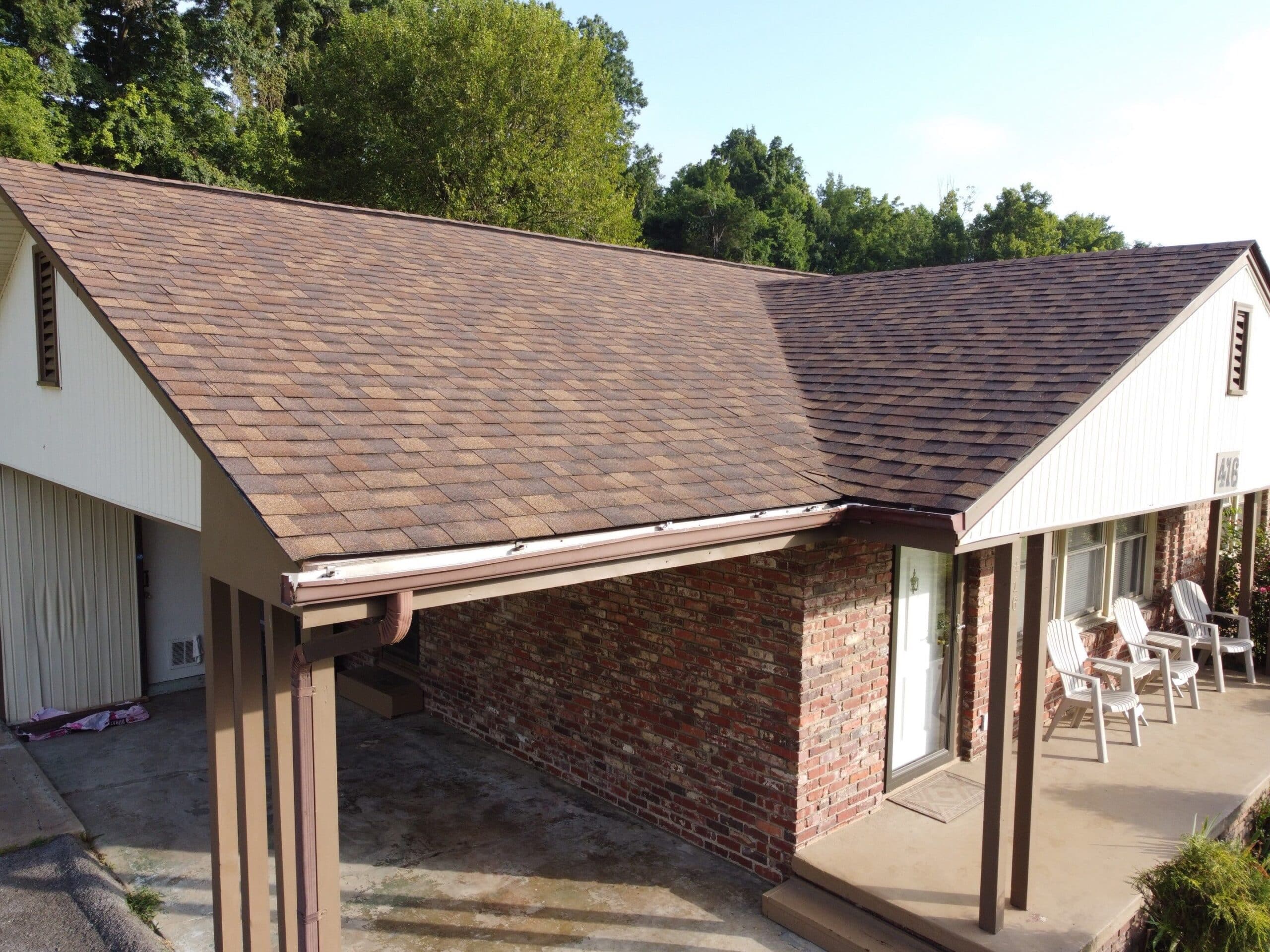
Choosing a new roof is one of the biggest exterior decisions a homeowner will make. The right roofing material affects curb appeal, storm resistance, maintenance, resale value, energy performance, and long-term cost. There is no single “best” roof for every home. A simple ranch, mountain cabin, new construction home, historic property, and commercial-style building may all call for different materials.
For homeowners in the Tri-Cities, it is especially important to think about wind, heavy rain, hail, summer heat, tree cover, roof pitch, and the overall style of the home. Below is a practical guide to several common roofing materials: three-tab shingles, architectural shingles, ribbed metal, standing seam metal, and synthetic roofing materials such as Brava.
Three-Tab Asphalt Shingles
Three-tab shingles are the traditional flat asphalt shingles many people picture when they think of a basic residential roof. They have a uniform, repeating pattern with three visible tabs per shingle, creating a clean but simple appearance. Their biggest advantage is cost. Three-tab shingles are usually one of the most budget-friendly roofing options, which can make them appealing for rental properties, starter homes, outbuildings, or projects where keeping the upfront price low is the main priority.
The tradeoff is performance and appearance. Three-tab shingles are thinner and lighter than architectural shingles, so they typically do not offer the same dimensional look, wind resistance, or long-term durability. While manufacturer warranties may vary, homeowners should generally expect a shorter useful life than premium asphalt or metal systems, especially on roofs exposed to strong sun, poor ventilation, overhanging trees, or frequent storm damage.
Three-tab shingles work best on straightforward roofs where budget matters more than upgraded curb appeal. They are usually not the best choice for homeowners who want a high-end look, maximum storm performance, or the longest service life. Common problem areas include wind lift, granule loss, cracking with age, and visible installation imperfections because the pattern is so uniform. If the slots are not lined up carefully, the roof can look wavy or uneven.
Architectural Asphalt Shingles
Architectural shingles, also called dimensional or laminated shingles, are now one of the most popular choices for residential roofing. They are made with multiple laminated layers, which gives the roof more depth, shadow, and texture than three-tab shingles. For many homeowners, architectural shingles offer the best balance of appearance, performance, availability, and cost.
In terms of quality, architectural shingles are generally thicker and more durable than three-tab shingles. Many product lines offer stronger wind ratings, better warranties, and upgraded algae-resistance options. They also come in a wide variety of colors and blends, making them a good fit for traditional homes, new construction, subdivisions, and homes where curb appeal matters.
Architectural shingles are usually more expensive than three-tab shingles but less expensive than standing seam metal or premium synthetic materials. Their lifespan depends heavily on installation quality, attic ventilation, roof pitch, storm exposure, and maintenance. A properly installed architectural shingle roof can be a strong long-term value, but it is still an asphalt product. Over time, UV exposure, granule loss, heat buildup, hail, and wind can wear it down.
Architectural shingles are a great choice for most residential properties. They may not be ideal for very low-slope roofs, homeowners wanting a true metal or slate look, or situations where the owner wants the longest possible roof life regardless of budget.
Ribbed Metal Roofing
Ribbed metal roofing, often called exposed-fastener metal roofing, uses panels with raised ribs that are screwed through the face of the panel into the roof deck or framing. This style is common on barns, garages, porches, cabins, workshops, commercial buildings, and many rural homes. It offers a clean, practical look and is usually the most affordable way to get into metal roofing.
The biggest benefits are durability, speed of installation, and value. Metal roofing can last significantly longer than basic asphalt when installed correctly, and it sheds rain well on suitable roof pitches. It is also available in a variety of colors and finishes, so it can work with both rustic and modern designs.
The main concern with ribbed metal is the exposed fasteners. Every screw creates a penetration through the roof panel. Those screws use rubber or neoprene washers to seal out water, but washers can age, crack, loosen, or back out as the metal expands and contracts. That means ribbed metal often needs periodic maintenance, especially on roofs with a lot of sun exposure or temperature swings.
Ribbed metal is best for homeowners who want metal performance at a more manageable price. It is not always the best fit for complex roofs with many valleys, dormers, and penetrations, or for homeowners who want the lowest-maintenance premium metal system.
Standing Seam Metal Roofing
Standing seam is the premium version of metal roofing most homeowners recognize by its sleek vertical lines and raised seams. Unlike ribbed metal, standing seam systems use concealed fasteners, meaning the fasteners are hidden beneath the panel seams or clips instead of being exposed across the roof surface. This helps reduce leak points and allows the metal panels to move more naturally with expansion and contraction.
Standing seam is one of the best choices for homeowners who want long service life, strong weather performance, a modern aesthetic, and low maintenance. It works especially well on homes with clean roof lines, contemporary designs, mountain-style homes, porches, additions, and accent roofs. It is also a strong choice for homeowners thinking about solar panels because many solar mounting systems can attach to standing seams without drilling through the roof surface.
The downside is cost. Standing seam requires more expensive materials, more specialized labor, and more careful detailing. It is typically much more expensive than asphalt shingles and more expensive than exposed-fastener metal. It also requires an installer who truly understands metal roofing. Poor flashing, improper clip spacing, oil canning, bad panel layout, or incorrect installation on the wrong slope can create problems.
Standing seam is a high-quality option for homeowners planning to stay in their home long-term or wanting a premium look. It may not be the right choice when budget is the main concern or when the home’s style calls for a softer, more traditional shingle appearance.
Synthetic Roofing Materials, Such as Brava
Synthetic roofing materials are designed to imitate premium natural materials like cedar shake, slate, or clay tile without some of their drawbacks. Brava, for example, manufactures composite roofing products that can provide the look of slate, shake, or barrel tile while being lighter than many traditional materials. These products are often used on high-end homes, historic-style properties, custom builds, and projects where appearance is a major priority.
The biggest advantages are aesthetics, impact resistance, weight, and longevity. Synthetic products can create a dramatic roofline without requiring the structural reinforcement often needed for real slate or clay tile. Many premium synthetic products carry long warranties and strong impact ratings, making them attractive in storm-prone regions.
The main drawback is price. Synthetic roofing is typically a premium material, often costing more than architectural shingles and sometimes competing with metal or other high-end systems. It also requires an installer who understands the specific product. Details like fastener placement, layout, flashing, underlayment, and ventilation still matter. No premium product can overcome poor installation.
Synthetic roofing is best for homeowners who want standout curb appeal and are willing to invest more upfront. It may not be the best fit for tight budgets, very simple utility structures, or homeowners who prefer the most common and easily matched roofing material.
How to Choose the Right Roof
Start with your goals. If budget is the top priority, three-tab shingles may be worth considering, though architectural shingles often provide better long-term value. If you want the best all-around residential option, architectural shingles are hard to beat. If you want metal roofing at a more accessible price, ribbed metal can make sense with proper maintenance. If you want a premium, long-lasting metal roof, standing seam is the stronger choice. If curb appeal and high-end design are the priority, synthetic materials like Brava can deliver a beautiful result.
The best roof is not just about the material. It is also about proper decking, underlayment, flashing, ventilation, fasteners, drainage, and workmanship. A quality installation will always outperform a better product installed poorly.
Redemption Roofing is located in Johnson City, Tennessee, and proudly serves homeowners throughout the Tri-Cities area. We have grown into one of the largest providers of roofing services in the area by focusing on quality workmanship, honest guidance, and roofing systems built to protect East Tennessee homes.
Research sources consulted: Owens Corning roofing shingle types, Consumer Reports roofing buying guide, Metal Roofing Alliance FAQs, McElroy Metal residential metal roofing types, Sheffield Metals standing seam vs. exposed fastener guide, and Brava composite roof tile information.
Love Redemption Roofing? Leave them a 5 Star Review on their Incredible Towns Page!