
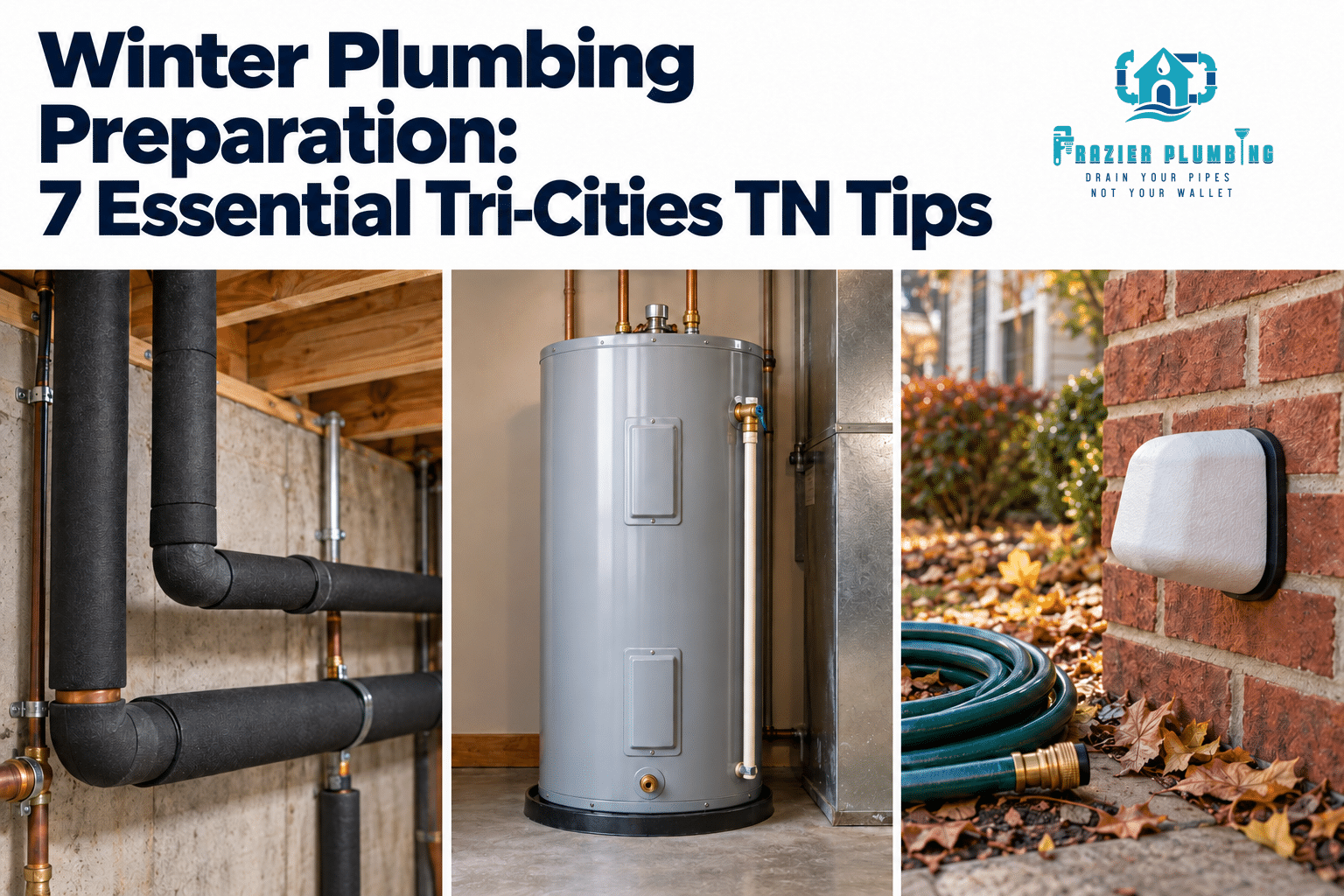
Winter Plumbing Preparation: 7 Essential Tri-Cities TN Tips
Winter plumbing preparation helps homeowners address vulnerable pipes, outdoor faucets, and water heaters before freezing weather arrives. For households in Blountville and across Northeast Tennessee, taking time to inspect the plumbing system can help reduce the risk of disruptive leaks and unexpected repairs.
The best starting point is a walk through the home, including areas that receive little heat. Exposed plumbing, drafts around pipe openings, and outdoor hoses left connected are all worth attention before temperatures drop.
Frazier Plumbing(opens in new tab) serves homeowners in Blountville, Bluff City, Bristol, Johnson City, Kingsport, Piney Flats, Elizabethton, Jonesborough, Erwin, and surrounding Tri-Cities communities. The following seven steps provide a practical checklist for preparing a home’s plumbing for colder weather.
Call Frazier Plumbing at (423) 530-3538(opens in new tab) or visit frazierplumbingtn.com(opens in new tab) to request service.
1. Insulate Pipes in Areas Exposed to Cold
 Pipes in crawl spaces, garages, attics, and other unheated areas deserve particular attention during winter plumbing preparation. Both hot and cold water supply lines can be vulnerable when surrounding temperatures fall.
Properly fitted pipe insulation helps slow heat loss. Homeowners should inspect existing insulation for missing sections, damage, or gaps around bends and connections. Any new insulation should be suitable for the pipe material and the installation location.
The American Red Cross recommends protecting exposed water pipes(opens in new tab) and checking plumbing in unheated spaces. Insulation offers protection, but it cannot guarantee that pipes will remain unfrozen through prolonged exposure to severe cold.
A pipe that has frozen during a previous winter deserves professional evaluation before another cold spell.
2. Close Off Drafts Near Plumbing
Cold air entering through gaps around plumbing can leave nearby pipes more exposed. Common places to inspect include pipe penetrations through exterior walls, basement windows, and doors leading to spaces containing water lines.
Appropriate caulk, weatherstripping, or another compatible sealing material can help address unwanted drafts. The U.S. Department of Energy identifies plumbing penetrations as common air leakage locations(opens in new tab).
Homeowners should pay special attention to plumbing beneath sinks on exterior walls. A cabinet may conceal gaps that are easy to miss during a general room inspection.
Air sealing must preserve required ventilation and combustion air for fuel-burning equipment. Openings serving a gas water heater or furnace should remain clear. A professional can help distinguish an unwanted draft from an opening the equipment needs to operate safely.
3. Inspect the Water Heater Before Winter
 A water heater belongs on every winter plumbing preparation checklist. Scheduling an inspection before cold weather provides an opportunity to address concerns while the system is still working.
Homeowners can begin with a visual check around the unit. Moisture beneath the tank, corrosion at connections, and visible drips should receive attention. Changes in performance, such as inconsistent hot water or unusual sounds, are also worth reporting.
Professional maintenance should follow the requirements for the particular model. Depending on the equipment, that may include checking connections, safety components, venting, and sediment buildup. Manufacturer guidance, such as A. O. Smith’s maintenance instructions(opens in new tab), emphasizes inspection of relevant piping and ventilation components.
Frazier Plumbing offers water heater repair and installation(opens in new tab), giving Tri-Cities homeowners a local resource for evaluating water heater concerns.
4. Check for Leaks Throughout the Home
An existing leak can be easy to overlook when it produces only occasional moisture. Before winter, homeowners should inspect beneath sinks, around toilets, at appliance connections, and along accessible water lines.
Warning signs include:
- Damp cabinet bottoms or discolored surfaces.
- Drips around valves and fittings.
- Musty odors near plumbing.
- Unexpected increases in water use.
- Water appearing around an outdoor faucet.
The EPA recommends checking the water meter before and after a two-hour period when no water is being used(opens in new tab). A change in the reading can indicate a leak that needs investigation.
Winter plumbing preparation should include resolving these concerns before covering pipes with insulation. Otherwise, new insulation may conceal a problem that continues to worsen.
For moisture with an unclear source, Frazier Plumbing’s leak detection and repair services(opens in new tab) can help homeowners take the next step.
5. Evaluate Whether the Water Heater Needs Insulation
Additional insulation may help some storage water heaters retain heat, but homeowners should check the manufacturer’s instructions before adding a blanket. The right approach depends on the heater’s design, existing insulation, and installation requirements.
The Department of Energy’s Energy Saver guide(opens in new tab) recommends considering tank insulation when appropriate and following manufacturer recommendations.
Installation details matter. Insulation must leave required controls, access panels, and safety components accessible. On gas water heaters, the top, burner area, and combustion air openings require particular care. The Department of Energy’s insulation guidance(opens in new tab) explains these restrictions.
A plumber can help determine whether an insulation blanket is suitable. Homeowners should also avoid applying a conventional tank blanket to tankless or heat pump equipment unless its manufacturer specifically permits it.
6. Disconnect Outside Hoses and Cover Spigots
 Outdoor faucets are easy to forget after gardening and lawn care slow down. Before freezing weather, homeowners should disconnect garden hoses, drain them, and store them for the season.
Hose removal matters even with many frost-free faucets. Water trapped by an attached hose can prevent proper drainage and contribute to freezing damage. Woodford Manufacturing explains this risk in its frost-proof faucet guidance(opens in new tab).
After following the faucet’s draining instructions, homeowners can fit an appropriate insulated cover over the spigot for added protection. The cover should fit securely against the exterior wall.
Every outdoor faucet should be included in the inspection, including those behind landscaping or on a rarely used side of the house. A dripping spigot should be repaired before it is covered.
7. Install a Shutoff Valve for Outside Spigots
A dedicated indoor shutoff valve allows an outdoor faucet’s supply to be isolated for seasonal maintenance. Homes without an accessible valve may benefit from having a plumber evaluate the installation.
The valve should be placed in a suitable location protected from freezing. The arrangement should also allow the exposed portion of the line to drain properly.
Closing a valve alone does not remove water trapped downstream. The American Red Cross advises closing interior valves supplying outdoor hose bibs and opening the exterior faucets to drain(opens in new tab). The precise procedure depends on the faucet and piping arrangement.
A plumber can identify the correct valve, explain any drain or bleeder connection, and show the homeowner how to prepare that particular line for winter.
Schedule Winter Plumbing Preparation in the Tri-Cities
A useful winter checklist should reflect the home’s actual trouble spots. A garage water line, a draft beneath a kitchen sink, or an outdoor faucet with a history of freezing deserves attention before the next temperature drop.
Homeowners can make a service visit more productive by noting previous problems, identifying inaccessible plumbing, and listing any changes in water heater performance. Addressing several concerns during one visit can also make seasonal maintenance easier to organize.
For homeowners in Blountville, Bluff City, Bristol, Johnson City, Kingsport, Piney Flats, Elizabethton, Jonesborough, Erwin, and surrounding Tri-Cities communities, Frazier Plumbing provides local plumbing services to help address leaks, water heater concerns, and outdoor plumbing needs.
Get started on winter plumbing preparation before freezing weather arrives. Call Frazier Plumbing at (423) 530-3538(opens in new tab) or visit frazierplumbingtn.com(opens in new tab) to request service.