
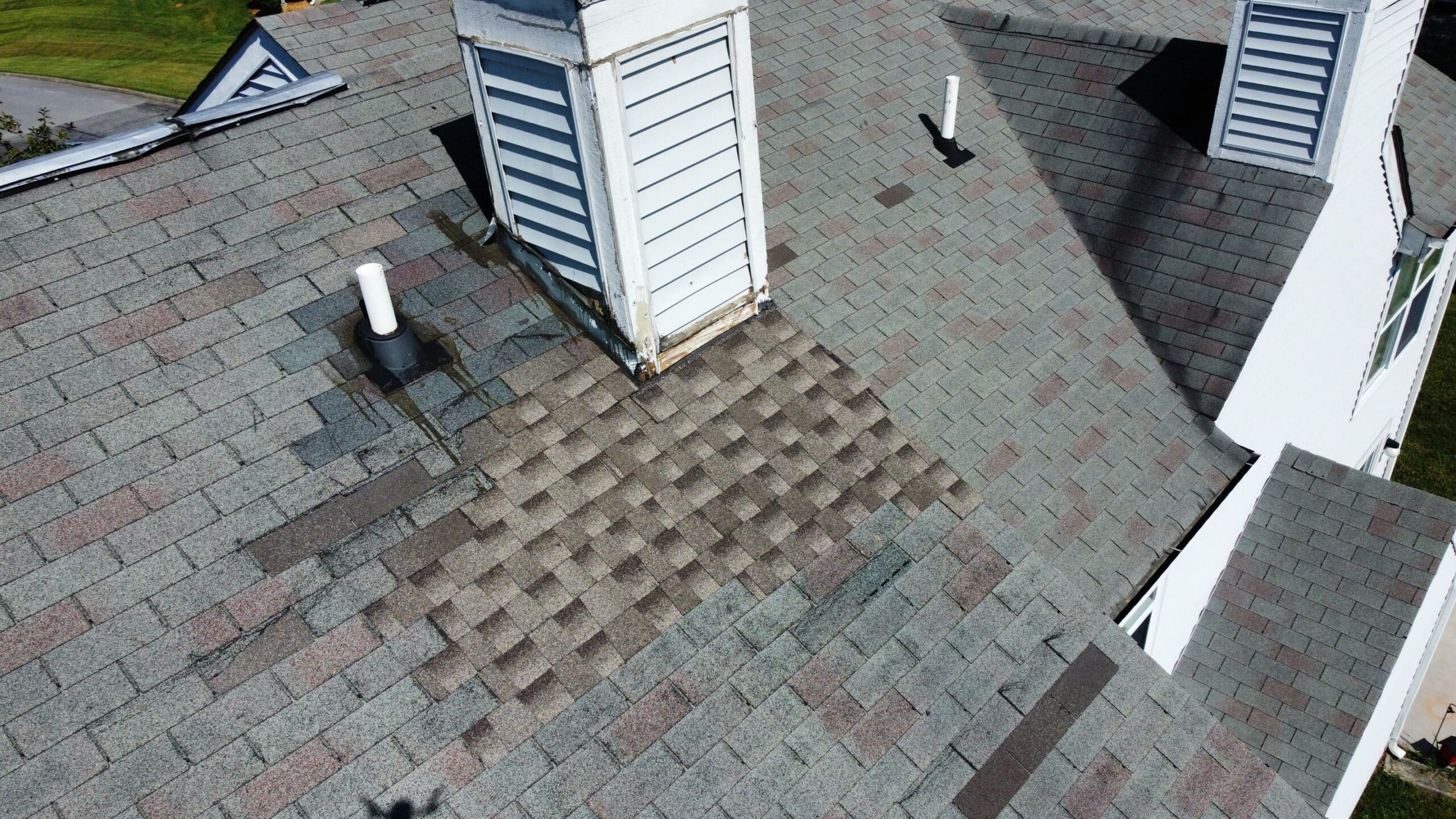
A roof is one of the most important protective systems on a home, but many roofing problems begin quietly.
A missing shingle is easy to spot from the ground, but other issues can develop around fasteners, pipe boots, flashing, attic ventilation, valleys, gutters, or aging shingles long before a leak shows up on the ceiling.
For homeowners, knowing the most common roofing problem areas can make inspections more meaningful and repairs more timely. A roof does not have to be actively leaking to need attention. In many cases, the warning signs appear first as lifted shingles, loose nails, cracked rubber, or dark attic stains, and preventative maintenance can save tens of thousands in the long run.
Here are some of the most common problem areas to watch for.
1. Wind Damage
High winds can affect a roof even when shingles are not completely blown off. Strong gusts can lift shingle edges, break the factory seal, crease the shingle mat, or loosen fasteners. Once a shingle has been lifted, it may lie back down and look mostly normal from the ground, but its ability to shed water and resist future wind can be reduced.
The most vulnerable areas are usually roof edges, corners, ridges, and spots where wind can get underneath the roofing material. Missing shingles, curled tabs, creases, exposed underlayment, and pieces of shingle in the yard are all signs worth taking seriously. After a major storm, it is wise to have the roof inspected before the next round of rain. Small wind damage can quickly become water damage if it is left alone, which is why this is one of the main common reasons insurance claims are approved.
2. Hail Damage
Hail damage is often misunderstood because it is not always dramatic. Large hail can crack, puncture, or break shingles, but smaller hail can still bruise the asphalt mat or knock away protective granules. Those granules are important because they protect the asphalt underneath from sunlight and weather exposure.
A hail-damaged roof may show dark spots, circular impact marks, missing granules, dents in soft metals, damaged ridge caps, or bruised shingles that feel soft when inspected by a professional. The trouble is that hail damage may not leak right away. Instead, it weakens the roofing material and shortens its service life. Over time, exposed asphalt can dry out, crack, and allow water to reach the layers beneath. Because hail damage can be difficult to identify from the ground, a professional inspection after a significant hailstorm is an easy way to have peace of mind.
3. Nail Pops and Improper Fastening
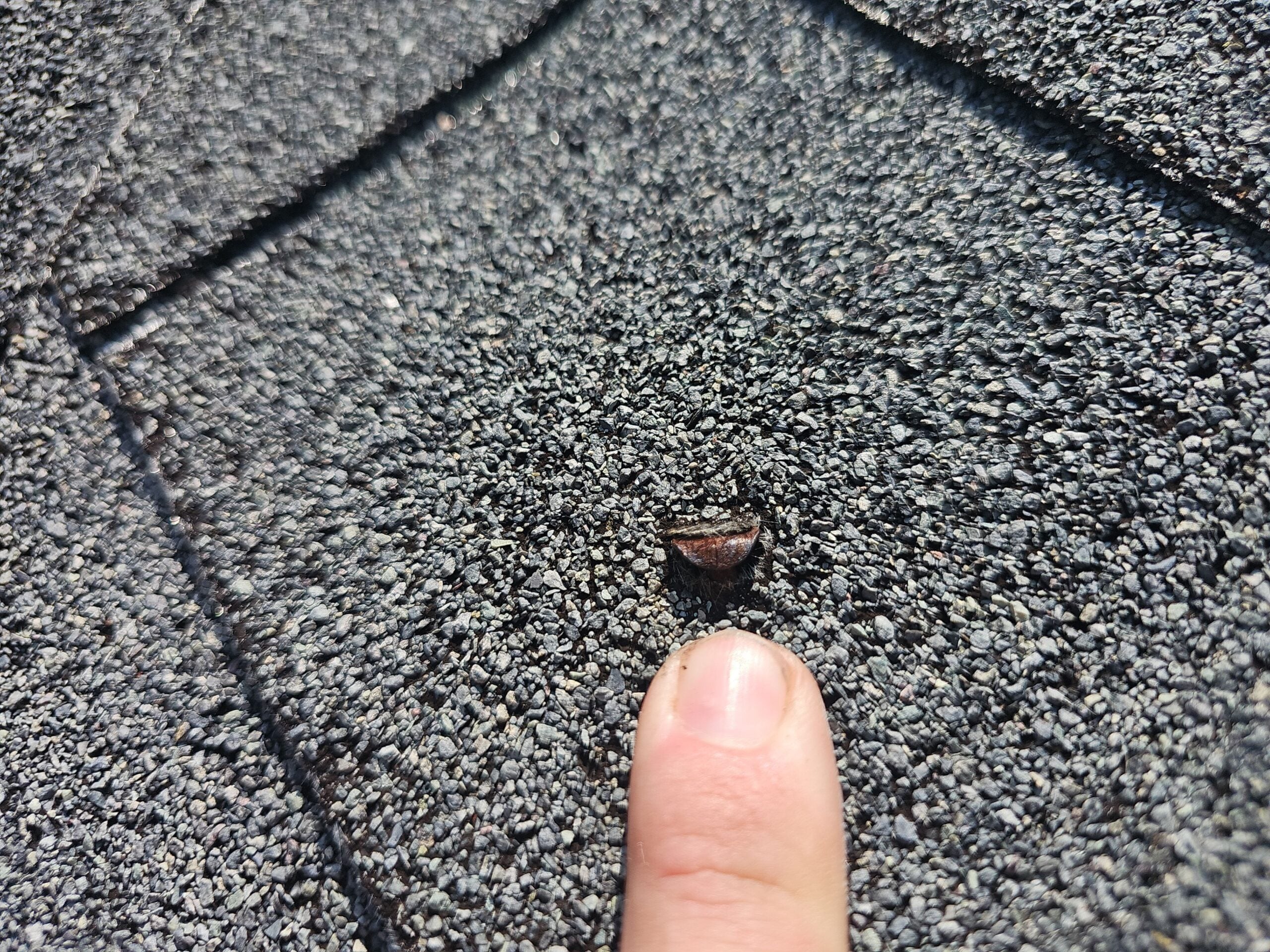
Roofing nails play a much bigger role than many homeowners realize. A properly installed nail should be placed in the correct nailing zone and driven straight and flush with the shingle surface. If nails are overdriven, underdriven, angled, placed too high, or placed too low, they can compromise the shingle’s performance.
"Nail pops" happen when fasteners begin to back out of the decking. This can be caused by deck movement, poor installation, moisture in the decking, or normal expansion and contraction over time. A popped nail may lift a shingle, create a small opening, or eventually puncture the shingle above it. These small openings are easy paths for wind-driven rain. During an inspection, a roofer will look for raised shingles, exposed nail heads, rusted fasteners, and patterns that suggest the original installation was not done correctly.
4. Failed Pipe Boots and Roof Penetrations
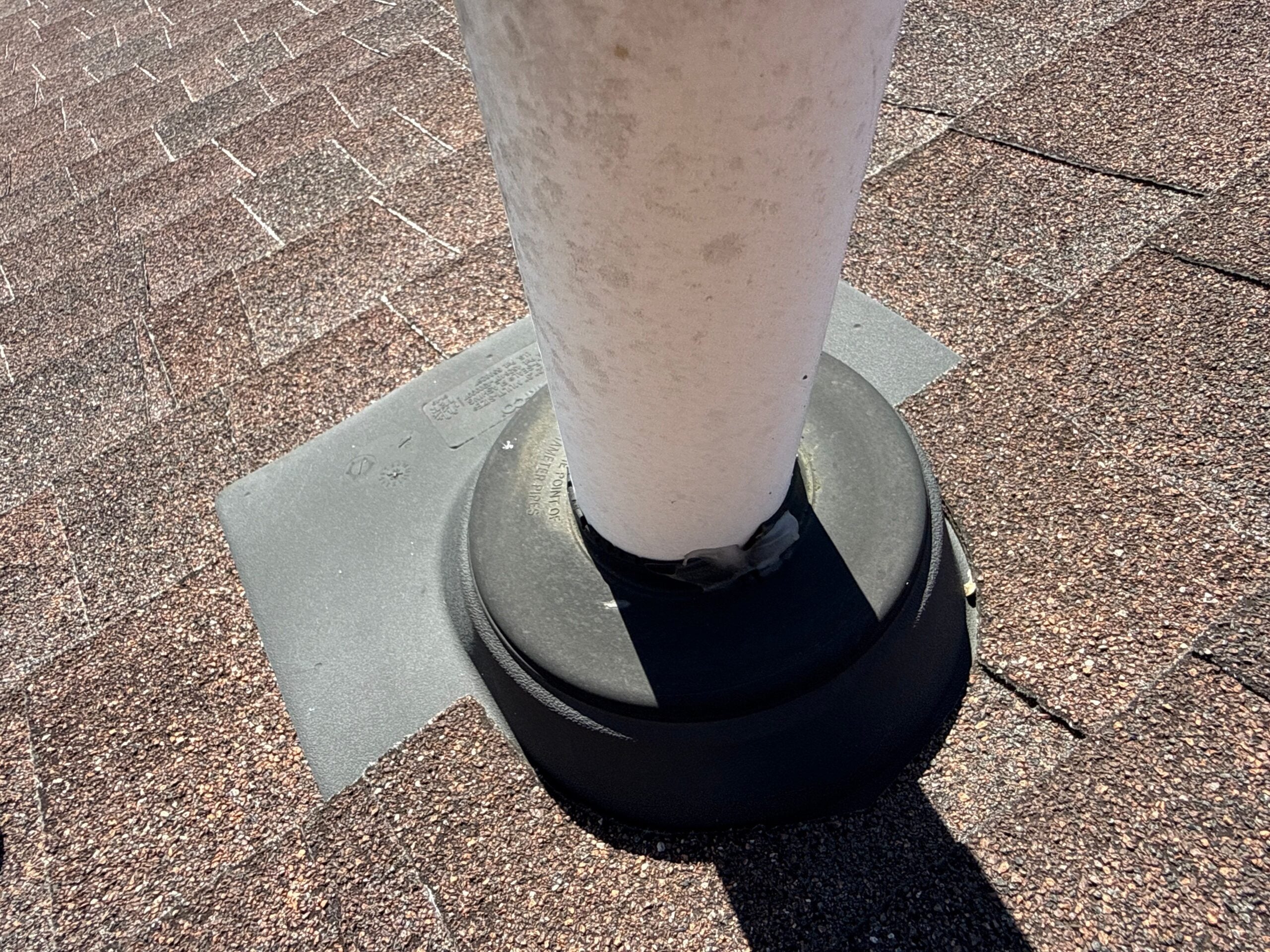
Anything that passes through the roof is a potential leak point. Plumbing vent pipes, exhaust vents, skylights, chimneys, and other penetrations all need proper flashing to keep water moving down and out. Pipe boots are the most common problem area because many standard boots rely on a rubber collar to seal tightly around the pipe.
Over time, sun exposure, heat, and weather can cause that rubber to crack, split, or pull away from the pipe. Once that happens, water can run directly into the attic around the penetration. Because the leak may follow framing or insulation before showing up inside the home, the ceiling stain may not appear directly under the failed boot. High-quality pipe boot products, such as Perma-Boot systems, offer more durable protection around these vulnerable areas.
5. Poor Ventilation and Attic Moisture
A roofing system is not only about what is visible from outside. The attic space below the roof matters too. Proper ventilation helps move heat and moisture out of the attic. A balanced system typically includes intake ventilation at the lower part of the roof, often through soffits, and exhaust ventilation near the top, such as ridge vents.
When ventilation is poor, heat and moisture can build up. In summer, trapped heat can accelerate shingle aging and make the home harder to cool. In colder weather, warm moist air from the living space can condense on the underside of the roof deck, leading to mold, mildew, damp insulation, rusted nails, and wood rot. Think of proper ventilation as the immune system for your roof; it helps the entire roof system stay healthy and last longer.
6. UV Damage, Aging, and Granule Loss
Asphalt shingles are built to handle years of sunlight, rain, temperature swings, and wind, but they do age. The mineral granules on the surface of a shingle help protect the asphalt from ultraviolet light. As shingles get older, those granules can loosen and wash into gutters and downspouts.
Some granule loss is normal, especially on a newer roof shortly after installation. Excessive granule loss, however, can be a sign that the shingles are wearing down. Bare spots, fading, cracking, curling, brittleness, and exposed asphalt are all indicators that the roof is losing its protective surface. UV damage tends to be worse on roof slopes that receive the most direct sunlight. Once shingles become brittle, they are more likely to crack during storms, foot traffic, or temperature changes. For these reasons, shingle roofs often last 18-25 years before showing signs of breakdown.
7. Valleys, Gutters, and Drainage Problems
Water management is one of the roof’s most important jobs. Valleys, where two roof planes meet, carry a large amount of water during heavy rain. If valley shingles, underlayment, or valley metal are damaged or poorly installed, leaks can develop quickly. Leaves and debris can also slow water flow and push moisture under shingles.
Gutters are part of the same drainage system. When gutters are clogged, undersized, loose, or pitched incorrectly, water can overflow onto fascia, siding, landscaping, foundations, and walkways. Splash guards may be needed where valleys dump a heavy volume of water into a gutter. Gutter guards can also help reduce debris buildup, especially around trees. Homeowners should pay attention to overflowing gutters, stained fascia, erosion near downspouts, and water pooling around the home. A good roof needs a good exit path for water.
8. Flashing, Wall Intersections, and Chimneys
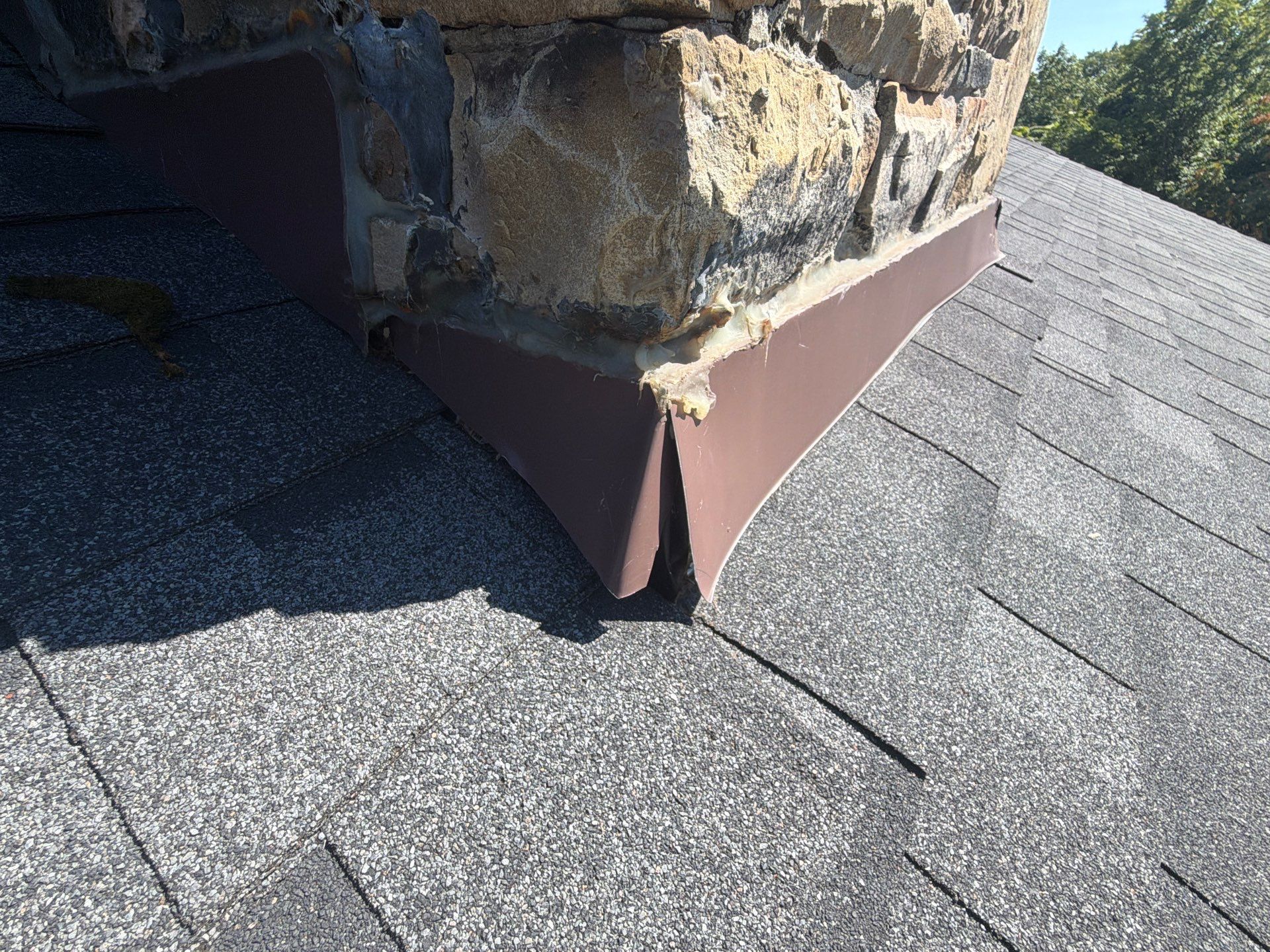
Flashing is one of the most important and most overlooked parts of a roofing system. It is used where shingles meet walls, chimneys, dormers, skylights, valleys, and other transitions. These are places where water naturally slows down, changes direction, or collects.
Poor flashing can cause leaks even when the shingles themselves are in good condition. Common flashing problems include rusted metal, missing or reused flashing during a roof replacement, exposed nails, dried sealant, loose counterflashing, or missing kick-out flashing where a roof meets a wall. Chimneys are especially leak-prone because they require several flashing components working together. This is an area where quality control during install is especially important.
Final Thoughts
Most roof problems start small. A lifted shingle, cracked pipe boot, clogged valley, popped nail, or damp attic may not seem urgent at first, but water has a way of finding the weakest point. Regular inspections, especially after storms, can help homeowners catch problems early and avoid more expensive damage later.
Redemption Roofing, located in Johnson City, Tennessee, offers free inspections in the Tri-Cities area. We have grown into one of the largest providers of roofing services in the area by focusing on quality workmanship, honest inspections, and dependable roofing solutions built for East Tennessee homes.
Research sources used includes GAF, CertainTeed, IBHS/FORTIFIED, NOAA/NSSL, Building America Solution Center, and the International Residential Code ventilation guidance.
The Next Step
Visit Redemption Roofing
Contact
Kole Owen
Love Redemption Roofing? Leave them a 5 Star Review on their Incredible Towns page! Review Redemption Roofing